
European Customer Support
On-site complaints, sorting, rework and commercial coordination — so a foundry does not go dark when a customer calls.
Explore serviceDie Casting · Tooling · Casting · Injection Moulding
Technical understanding, commercial experience and local execution — connecting manufacturers with the customers they serve, and buyers with the Chinese suppliers they depend on.
Selected die-casting customers


Selected purchasing customers


The model
We sit between manufacturing in China and the customers who buy from it — close enough to both shop floors that the work actually moves.
On-site complaints, sorting, rework and commercial coordination — so a foundry does not go dark when a customer calls.
Explore serviceSupplier development, quality and delivery follow-up on the ground — so a buyer is not running China from a spreadsheet and a time zone.
Explore serviceWhy Naisitong — 服务优势
Deep process and shop-floor understanding. Die casting first; tooling, casting and finishing in the same vocabulary. We look for root cause, not a polite translation of the 8D.
Industrial business is not a catalogue. Contracts, payment terms, tooling ownership, cost structure — we know where the interests sit on both sides of the table.
Years of living and working between China and Germany. We hear what was said, and what was meant, and we do not let a “yes” travel unexamined.
A German company that can be on site in hours, and engineers in China who can stand at the machine. Distance and time zone stop being the excuse.

About — 公司简介
Parts can be technically sound and the project still stalls — on language, on what “good” looks like, on who owns the next action. That friction is expensive, and it is rarely written into the RFQ.
NaiSiTong was set up to work both sides of that gap: European industrial standards in the head, Chinese manufacturing reality on the ground, and people who can speak both without a translator in the middle.

Case studies — 案例
Four published jobs from European Customer Support — complaint, sorting, packaging, assembly. Short briefing here; the full write-up lives in Insights.
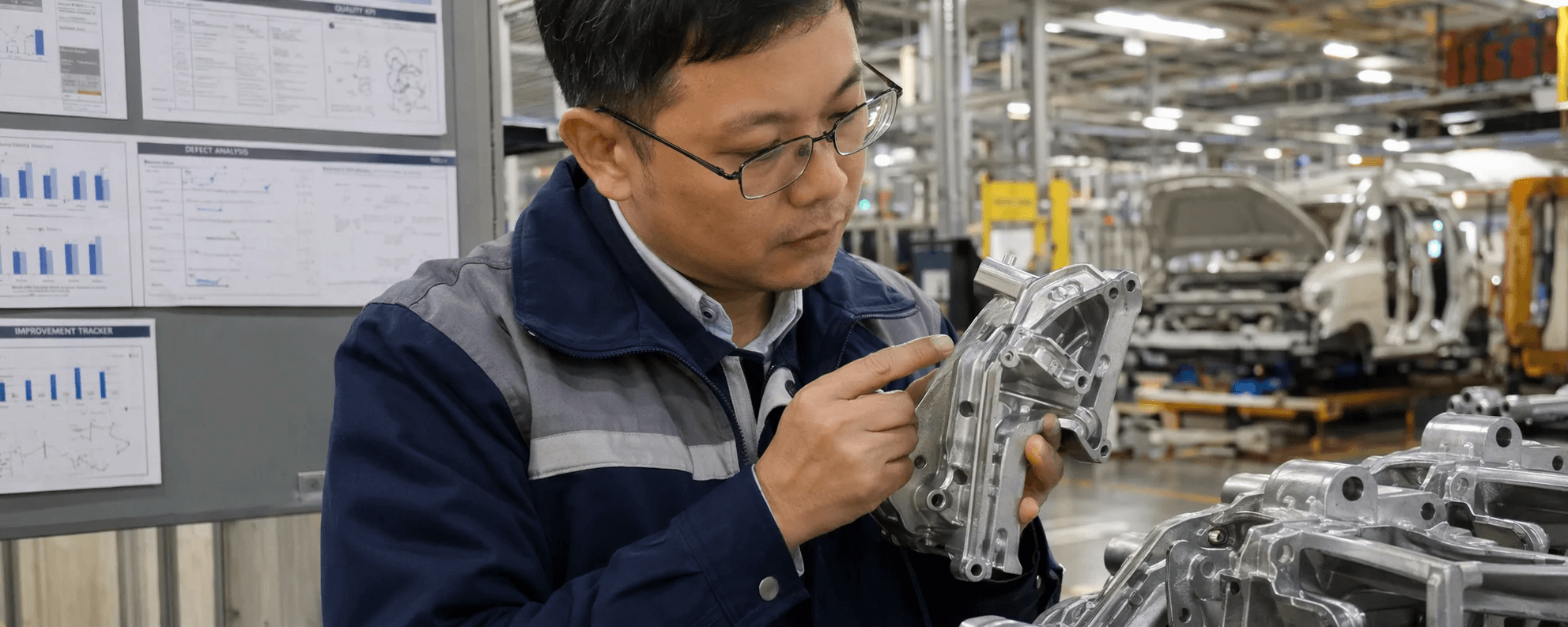
A German Tier-1 flagged impact marks on aluminium housings. Defect rate near 10%, the batch at risk, the line needing 1,000 parts a day. Cosmetic standards did not match.
Read the full case
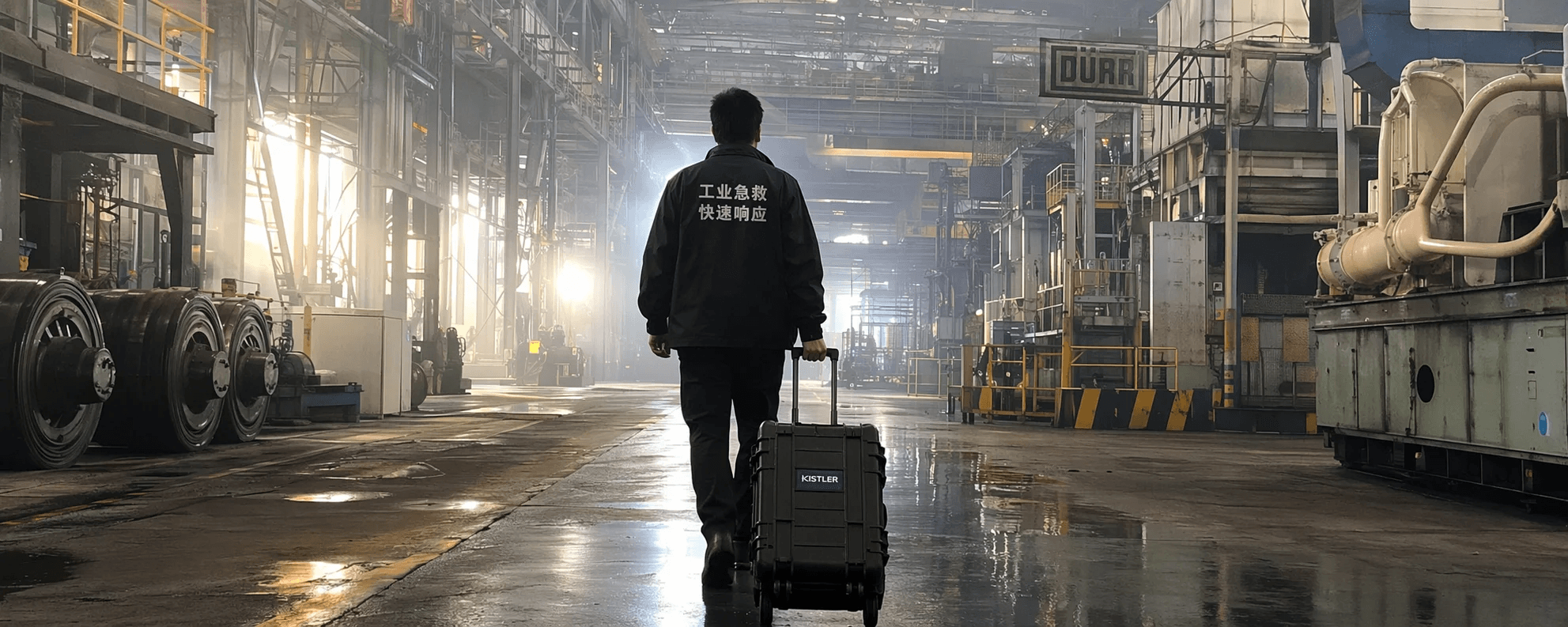
2020. A German Tier-1 line running 24×7, 3,500 good parts a week. Warehouse cap of nine people, hours locked by the works council. Five working days had to cover seven days of consumption.
Read the full case
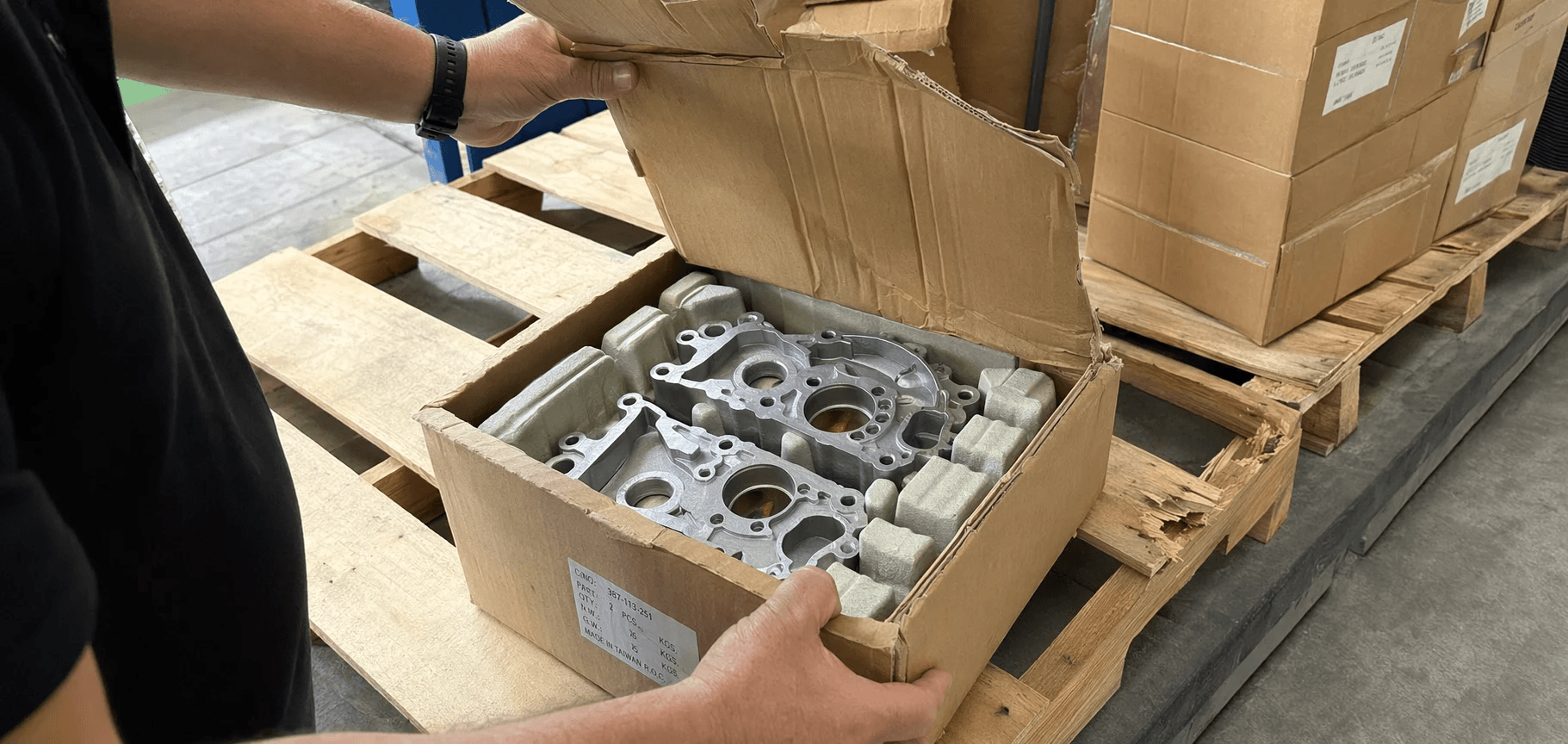
Three pallets of fully dimensioned parts arrived in Germany with damaged cartons. The Tier-1 wanted everything back by Friday, with the OEM due the next week. Another full inspection cycle would not make the date.
Read the full case
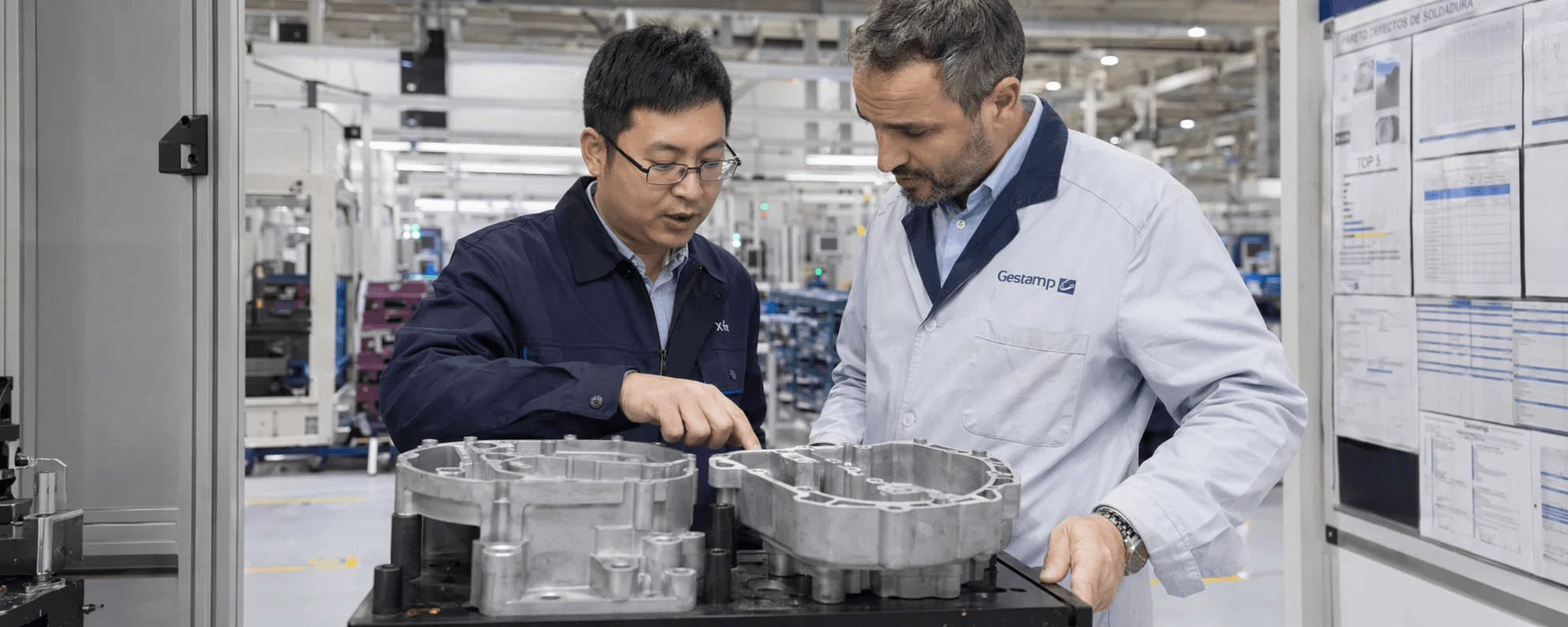
A European specialist OEM reported a gap on an aluminium cover. The supplier’s outgoing inspection was clean. The customer wanted someone on the floor, not another report.
Read the full case
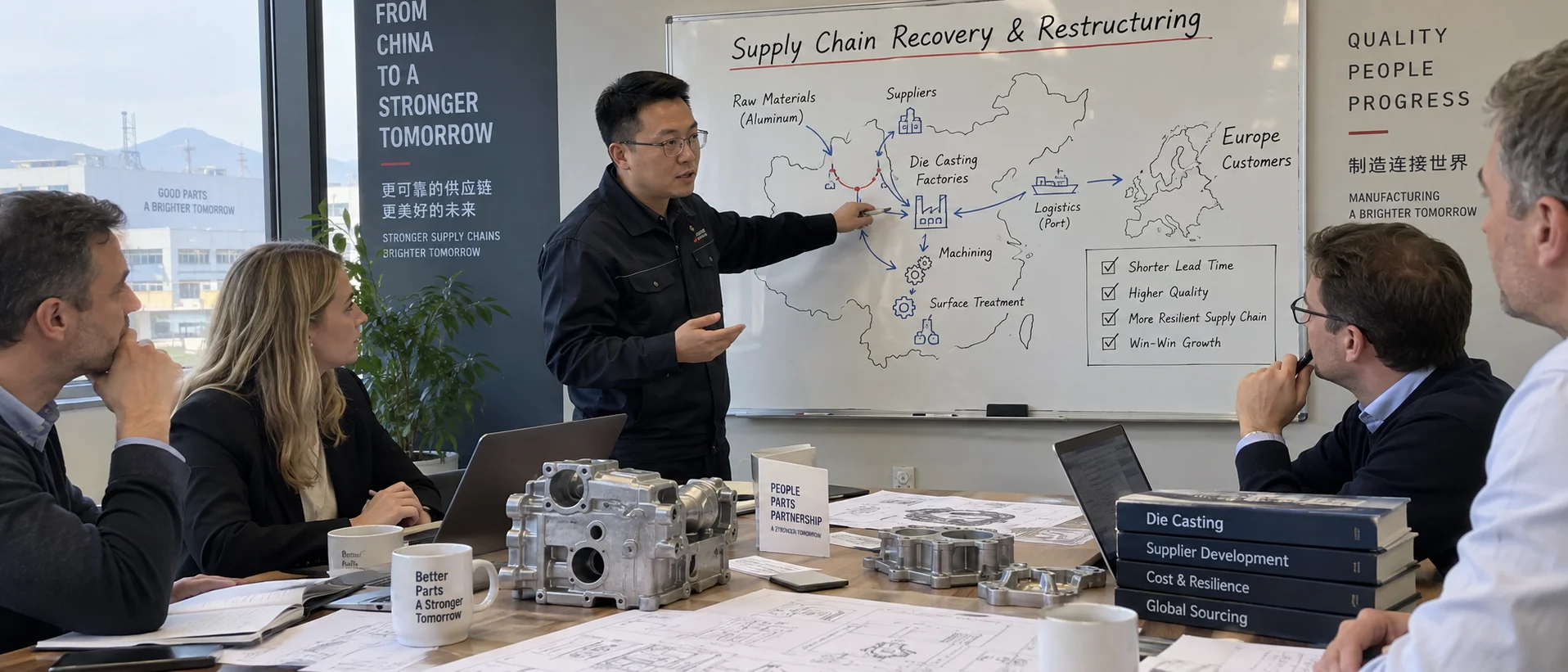
A European customer's trading partner filed for bankruptcy overnight, cutting off 30+ die-cast projects. The customer didn't even know who was actually making their parts — production continuity at risk.
Read the full case
Insights — 行业洞察
Practical writing on die-casting sorting, complaint handling, and the realities of bridging Chinese manufacturing with European industry.

Hungary hosts more than 700 automotive companies and around 70 Tier-1 suppliers, producing some 437,000 vehicles and 2 million engines in 2024; Serbia is steadily expanding its parts and casting capability through international investment. The real opportunity in these two Central and Eastern European nodes is not car output but where gaps are opening in the automotive and die-casting supply chain.
Read article

Spain built around 2.274 million vehicles in 2025, still one of Europe's main car-producing bases, while France has planned six battery gigafactories targeting 100–120 GWh. The real change in these two western European manufacturing bases is not 'western European decline' but the recombination of traditional manufacturing strengths with new product structures, energy conditions and supply-chain models.
Read article

Poland and Czechia together account for roughly 380,000 direct automotive manufacturing jobs, and Central and Eastern Europe now produces about a third of the EU's vehicles. In a European manufacturing landscape shifting from concentrated production toward a transnational regional division of labour, these two countries are not simply two new low-cost locations — they are the key supply-chain nodes that reveal how Europe's industrial geography is being redrawn.
Read article
Contact — 联系方式
A few sentences are enough. We reply within one business day — German hours or Chinese hours, whichever you work.
CN China Company
China, Hubei Province
Phone +86 135 8037 9618
DE Germany Company
Germany, North Rhine-Westphalia
Phone +49 152 0264 6584
Or fill in the form below — we reply within one business day.